

Dental Implants
Dental implants are an effective way to replace missing teeth
When teeth are lost because of disease or an accident, dental implants may be a good option.
You may want to choose dental implants if you:
- Hide your smile because you have missing teeth
- Wear dentures that are uncomfortable
- Are dissatisfied with your removable partial dentures
- Want to keep your other teeth intact
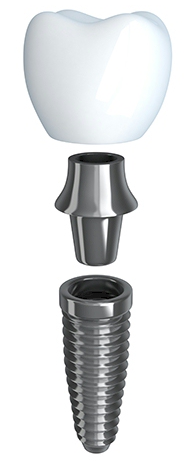
Many people choose implants to replace a single tooth or several teeth, or to support a full set of dentures. Implants are surgically placed into the upper or lower jawbone. They replace the root of one or more missing teeth.

What are Dental Implants made of?
Dental implants are made of titanium (a strong, lightweight metal) and other materials that are well accepted by the body. More than 5 million implants are placed each year by dentists in the United States.
Benefits of Dental Implants:
- Implants offer firm support to man-made teeth. Dentures, bridges or single teeth attached to the implants won’t slip or shift in your mouth- a very important benefit when eating and speaking.
- This secure fit also helps man-made teeth feel more natural than typical bridges or dentures.
- Some people may find implant-supported dentures more comfortable than dentures that do not use implants.
- Where teeth are missing, dental implants also help keep the jawbone from shrinking.
- Implants are a good value, because they can last a lifetime with good care.
Who is a good candidate of dental implants?
If you are in good general health and your jaw can support an implant, this treatment may be a good option for you. Your health is more important than your age.
However, implants are not an option for everyone. Patients should be in good health or cleared by their physicians before scheduling any implant surgery. They should have enough jawbone to support the implant or be able to have surgery to build up the jawbone. Bone can be built up with a bone graft of sinus lift surgery.
Chronic illness, such as diabetes and leukemia, may slow healing after surgery. Implant treatment may not be a good option for patients with these illnesses. Tobacco use also can slow the healing process.
If your dentist does recommend implant treatment, careful oral hygiene is essential for the success of the implant. You must spend time caring for the implant and making sure the area around it is very clean. If not, you might increase your risk of gum disease, which can weaken the bone tissues needed to support the implant.

Steps Involved in Dental Implant Treatment
Many kinds of implants are available. Treatment can take only one day, or it can take several months, or somewhere in between. After your consultation with our Katy dentists, we can discuss which type of dental implant would be best for you.
Implant treatment usually involves three basic steps:
For the first step, the Dentists at Dentistry By RSE will carefully locate where the implant should be placed, using x-rays or other pictures. Then the dentist surgically places the implant into the jawbone. You may have some swelling and/or tenderness after surgery. Your dentist may prescribe pain medicine to ease the discomfort. During the healing process, we may advise that you eat soft foods for a couple of days.
What makes an implant so strong is that the jawbone grows around it and holds it in place. This process, called osseointegration (OSS-e-o-in-te-Gray-shun), takes time. It will be 3-4 months before the implant is completely integrated into the bone. Then you can get the permanent replacement tooth or teeth. In many cases, the implant and temporary replacement teeth can be replaced in one visit.
For a single tooth implant, we typically custom make a new tooth for you, called a dental crown. It is designed to look just like your other teeth. Implant-supported bridges and dentures are also custom-made to look like natural teeth and to fit your mouth.